Buying Land vs. Already Owning Land: What Changes When Building a Custom Home in Mid-Missouri?
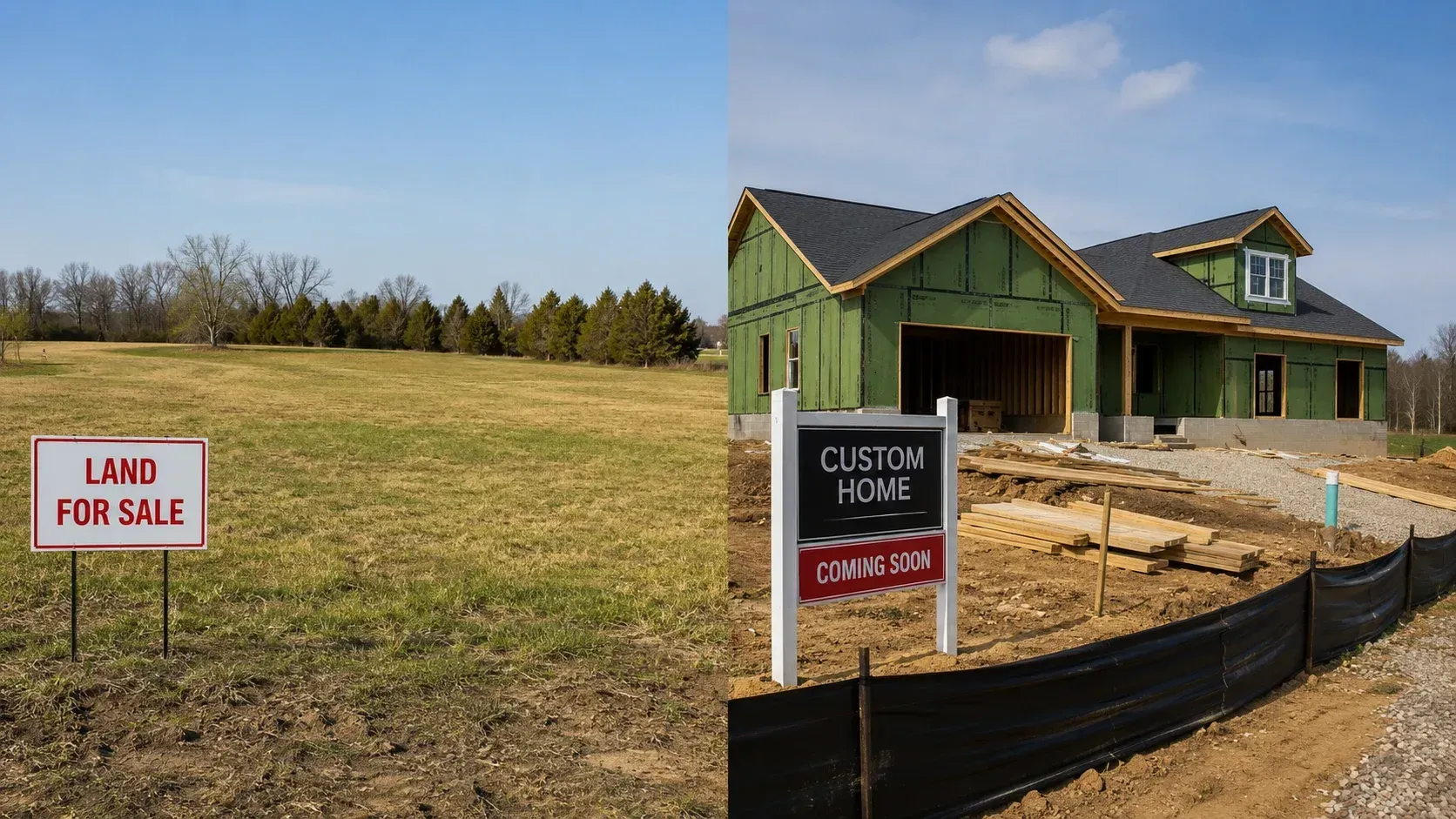
Table of Contents
- What Changes Between Buying Land and Already Owning Land?
- Due Diligence Steps for Buying Land
- What Already Owning Land Does and Does Not Solve
- Financing Differences Between the Two Paths
- Site Work and Timeline Considerations
- Conclusion
- Considering Land and a Custom Home in California, MO?
- Frequently Asked Questions
Key Takeaways
- Buying land for a custom home adds an upfront due diligence phase, including soil, utility, and zoning verification, that already-owned land may or may not have gone through.
- Already owning land does not guarantee the site is build-ready. Older parcels sometimes carry outdated surveys, unclear easements, or utility access that was never confirmed.
- Financing differs between the two paths, since raw land purchases often require a separate land loan before a construction loan is arranged.
- Site work costs and timelines depend more on the physical condition of the land than on how long it has been owned.
- A land or site evaluation early in the process, regardless of ownership history, reduces the chance of costly surprises once construction begins.
Introduction
The main difference between buying land and already owning land when planning to build a custom home is timing, not certainty. Buying land adds an upfront phase where soil conditions, utility access, zoning, and legal boundaries still need to be verified before custom home building can begin, while already owning land moves that verification earlier or later depending on what was checked at the time of purchase.
Neither path guarantees a site is ready to build on. A parcel purchased years ago may have an outdated survey, an easement that was never recorded clearly, or utility access that changed since the original purchase. A newly purchased lot may come with more current information but still requires the same due diligence before design and construction planning move forward.
For homeowners and business owners considering a custom home in and around California, MO, understanding what changes and what stays the same between these two starting points helps set realistic expectations for both budget and timeline.
What Changes Between Buying Land and Already Owning Land?
Buying land introduces an active due diligence period before a purchase closes, while already owning land shifts that verification to whenever the current owner chooses to confirm it, which may have already happened, partially happened, or never happened at all.
When land is being purchased, most buyers work through inspections, surveys, and zoning checks as a condition of the sale. This creates a natural checkpoint where problems can be identified before money changes hands.
When land is already owned, there is no forced checkpoint. Some owners purchased land years earlier with thorough due diligence. Others acquired land through inheritance, a quick purchase, or a transaction that did not include the same level of verification. This means already-owned land can be just as uncertain, or just as ready, as land currently for sale.
Due Diligence Steps for Buying Land
Buyers evaluating raw or undeveloped land for a custom home typically work through several categories of verification before finalizing a purchase.
- Soil and site conditions. Soil composition affects foundation design and, for properties without municipal sewer service, whether a septic system can be installed. A percolation test is commonly required in rural areas relying on septic systems.
- Utility access. Confirming whether electric, water, and other utilities are available at the property line, or how far they would need to be extended, has a direct effect on site development cost.
- Zoning and land use. Local zoning determines what can legally be built on a parcel, including setback requirements, allowable structure types, and any use restrictions.
- Easements and access. A recorded easement may grant a utility company or neighboring property owner certain rights over part of the land, which can affect where a home can be positioned.
- Flood zone status. Properties in a flood zone may face additional building requirements or insurance considerations.
- Survey accuracy. A current survey confirms boundary lines, which matters for setback compliance and avoiding disputes with neighboring parcels.
What Already Owning Land Does and Does Not Solve
Already owning land removes the pressure of a purchase timeline, but it does not automatically confirm that the site is ready for construction. Some parcels were bought specifically for a future home and thoroughly evaluated at the time. Others were acquired without this level of review.
Already owning land solves the question of purchase price and timing but does not, by itself, confirm soil suitability, utility access, zoning compliance, or survey accuracy. Those items still need to be verified before design work is finalized.
A property owned for many years may also be affected by zoning changes that occurred after the original purchase, or by utility infrastructure that shifted in the surrounding area. Revisiting these items before finalizing plans for new construction projects is a reasonable step even for land that has been owned for a long time.
Financing Differences Between the Two Paths
Financing structures often differ depending on whether land is being purchased alongside the home build or was acquired separately in the past.
Buying land for a custom home frequently involves a land loan, which is generally structured differently than a traditional mortgage, often with a shorter term and a larger down payment requirement. Once construction begins, this may be paired with or transitioned into a construction loan.
Already owning land can simplify this step, since the equity in the land itself may be used toward the overall project financing, depending on the lender and loan structure. This is a conversation best had directly with a lender familiar with construction financing, since terms vary significantly between institutions.
Site Work and Timeline Considerations
Site work, including clearing, grading, and utility installation, depends more on the physical condition of the land than on how long it has been owned. A recently purchased lot with easy utility access may require less site work than a long-owned parcel with challenging terrain or no utility infrastructure nearby.
Timeline impact follows the same logic. Land that requires significant grading, a new septic system, or extended utility runs will generally add time to the front end of a project, regardless of when the land was acquired.
Conclusion
The core difference between buying land and already owning land for a custom home comes down to when due diligence happens, not whether it is required. Buying land generally includes a structured verification period as part of the purchase process, while already owning land shifts that responsibility to whenever the owner chooses to confirm soil conditions, utility access, zoning, and survey accuracy.
Neither path removes the need for this verification. Understanding this early, regardless of how long the land has been owned, helps set a more realistic budget and timeline before design and construction planning begin. For those weighing this decision, reviewing the essential steps to planning a custom home can provide additional context on how site evaluation fits into the broader planning process.
Considering Land and a Custom Home in California, MO?
If you are weighing whether to purchase land or move forward with land you already own for a custom home build, a conversation about site evaluation can help clarify what still needs to be confirmed either way. This is offered as general guidance, not a determination of what your specific parcel requires, and no outcome or timeline is guaranteed.
There is no obligation to move forward, and site-specific questions should ultimately be confirmed through direct evaluation of the property, ideally with guidance from a local Missouri contractor familiar with the area.
Contact Us to talk through your general goals before finalizing land or design decisions.
Frequently Asked Questions
Is it cheaper to build on land I already own than to buy land?
Not necessarily. Cost depends on the physical condition of the land, including soil, utility access, and grading needs, rather than on how long the land has been owned.
Do I still need a survey if I've owned the land for years?
A current survey is generally recommended before finalizing design plans, since older surveys may not reflect changes on neighboring properties or updated boundary interpretations.
Can zoning restrict what I build even on land I already own?
Yes. Zoning can change after a purchase due to local ordinance updates or annexation, so confirming current zoning before designing a custom home is a reasonable step regardless of ownership length.
What is a percolation test and why does it matter?
A percolation test measures how well soil absorbs water, which is used to determine septic system feasibility in areas without municipal sewer service. Poor results can limit buildable areas on a parcel.
Do land loans work the same way as construction loans?
No. Land loans are typically structured separately from construction loans, often with different terms and down payment requirements. Financing structures vary by lender, so confirming details directly with a lender is recommended.
Related Posts