Outdoor Kitchens 101: What Lake Ozarks Homeowners Should Know Before Building One
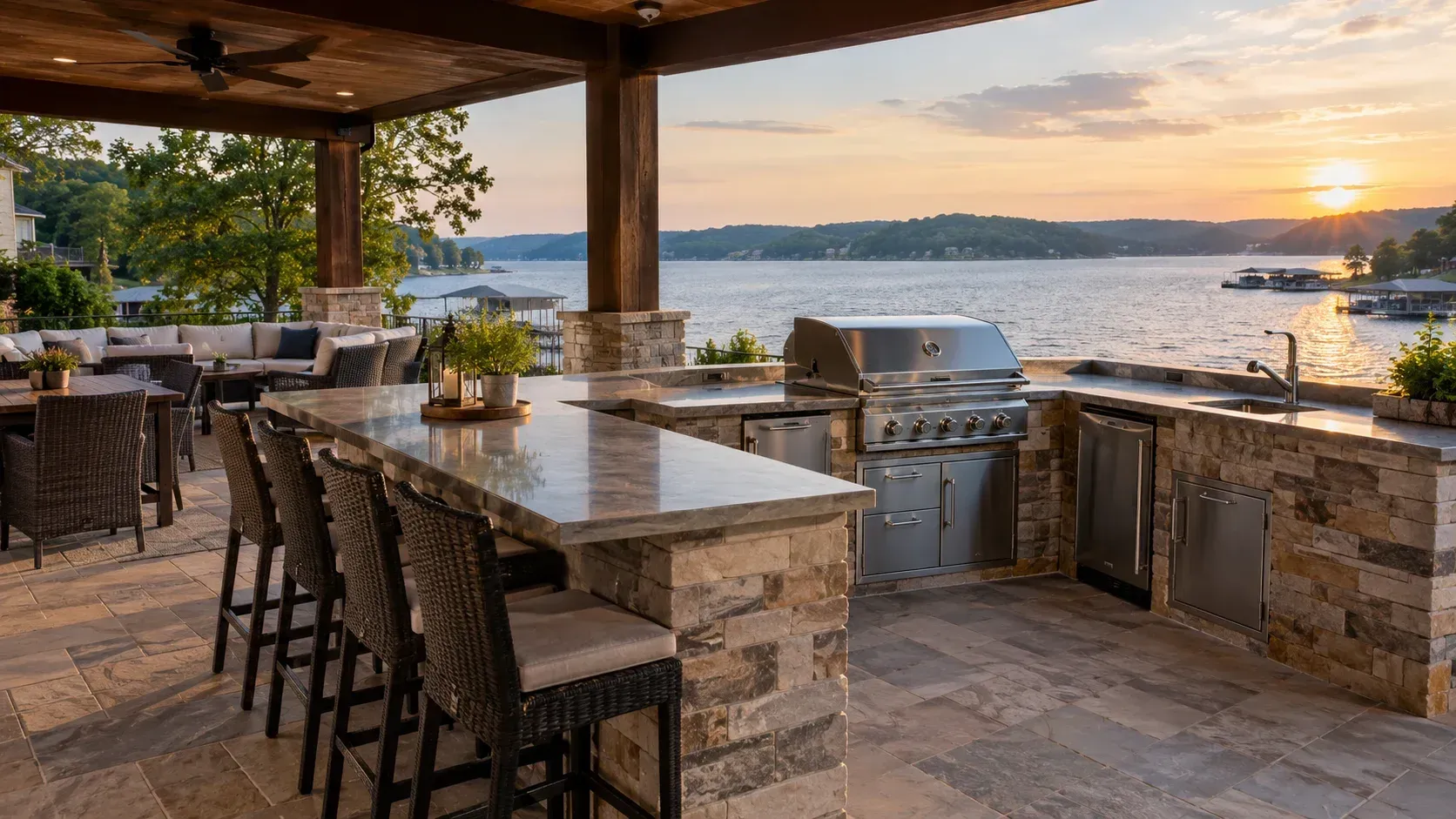
Table of Contents
- Introduction
- Outdoor Kitchen Design Starts With How You Actually Cook
- Where It Goes Matters More Than What Goes In It
- Utilities Are the Part That Moves the Budget
- Outdoor Kitchen Construction in a Freeze-Thaw Climate
- Materials That Survive a Missouri Year
- Built-In, Modular or Pre-Built Outdoor Kitchens
- Permits, Setbacks and Lakefront Rules
- Conclusion
- Start With a Plan, Not a Product List
- Frequently Asked Questions
Key Takeaways
- Site, utilities and foundation decide the budget. Appliances are the smallest part of the number.
- Missouri's freeze-thaw cycle is the hardest thing an outdoor kitchen here has to survive.
- Running gas, water and power out to the spot is usually the single largest line item.
- Lake properties bring slopes, setbacks and shoreline rules that a flat suburban lot does not.
- Modular units cost less and move with you. Built-in masonry lasts longer and
Introduction
The three things that decide what an outdoor kitchen costs are where it sits, what utilities have to reach it, and what it sits on. Appliances are the fun part and the cheapest part. Homeowners usually start with the grill and work backward, which is how budgets get a surprise halfway through.
Lake properties add their own wrinkles: slopes, setbacks and weather that works on anything built outdoors. Designing one from scratch around how you actually live is a different exercise from picking a layout off a page.
Here is what to settle before anything gets ordered.
Outdoor Kitchen Design Starts With How You Actually Cook
Be honest about the cooking you do now, not the cooking you imagine doing.
If you grill for four on weeknights, you need a grill, counter space on both sides, and somewhere to put a plate down. If you host twenty on Saturdays, you need prep space, cold storage and a place for people to stand that is not in your way.
Counter space is what people miss. A good grill with nowhere to set anything down is less useful than a modest grill with four feet of counter beside it. Work out the sequence you actually follow, from fridge to prep to grill to serving, and lay the run out in that order.
Then be ruthless about appliances. A pizza oven, a smoker, a beverage fridge and a side burner each add cost, utilities and winterizing. Pick the ones you will use in October, not just in June.
Where It Goes Matters More Than What Goes In It
Four questions settle the location:
How far from the indoor kitchen? Everything you forgot is in there. Distance adds steps on every trip and cost on every utility run.
Which way does the smoke go? Prevailing wind pushing grill smoke into the house or across the seating area is a permanent annoyance that no amount of money fixes afterward.
Is it level? Lake lots rarely are. A sloped site means retaining, fill or a stepped design, and that is structural work before anything else starts.
Does the roofline help? Partial cover extends the season and protects the equipment. It also changes how smoke behaves, so cover and ventilation get planned together.
Most Lake properties already have a deck or patio, and the question becomes whether to build there or beside it. Treating the whole area as one outdoor room usually produces a better result than bolting a kitchen onto whatever is there.
Utilities Are the Part That Moves the Budget
This is where estimates diverge, and it has nothing to do with the appliances.
Gas. A natural gas line means trenching from the meter. Propane means a tank, placement and refills. Many kitchens here run propane for that reason.
Water and drain. A sink needs supply and somewhere for the water to go. Drainage is the harder half, and it has to be freeze-protected.
Electrical. Refrigeration, lighting and outlets need properly rated outdoor circuits run to the spot.
Winterizing. Any water line out there has to be drainable before the first hard freeze.
Trenching distance is the lever. Twenty feet from the house is a different project from eighty feet down a slope. If the budget is tight, moving the kitchen closer saves more than cutting an appliance.
Outdoor Kitchen Construction in a Freeze-Thaw Climate
Missouri winters freeze and thaw repeatedly rather than staying cold. Water gets into masonry, freezes, expands, and works the material apart a little each cycle. Over a few years that is what cracks countertops, splits grout and shifts a poorly founded structure.
Which makes the base the most important thing nobody looks at. A built-in kitchen needs a foundation that will not move with the frost, and the slab needs to drain rather than hold water against the structure. The slab or patio underneath it is doing more work than the countertop sitting on top.
Building on an existing deck is its own question. A masonry kitchen is heavy, and most decks were never framed for that load. Sometimes the framing can be reinforced, sometimes a lighter modular unit is the answer, and sometimes putting it on a deck means rebuilding the structure underneath first. That gets checked before anything is ordered, not after.
Materials That Survive a Missouri Year
Everything out there faces freeze-thaw, humidity, UV and whatever the lake adds.
Stainless steel is the standard for appliances and doors for good reason, though grade matters outdoors. Natural stone holds up well on surfaces and tolerates heat. Treated wood works for cabinetry where it is detailed to shed water rather than hold it.
Indoor-rated cabinetry, standard appliances and untreated wood all fail outdoors here, usually within a few seasons. The repair costs more than the upgrade would have.
Built-In, Modular or Pre-Built Outdoor Kitchens
Three routes, and the right one depends on how long you plan to stay.
Built-in masonry is permanent, fully custom, and the most durable option. It takes the longest and costs the most, and it stays with the house.
Modular units assemble from finished sections. Faster, less expensive, and they can be reconfigured or taken with you.
Pre-built setups cut construction time considerably. A sensible choice if you want the thing usable this season and the layout is straightforward.
Permanent construction generally adds more to the property. If you are not sure how long you are staying, that is an argument for modular rather than an argument for waiting.
Permits, Setbacks and Lakefront Rules
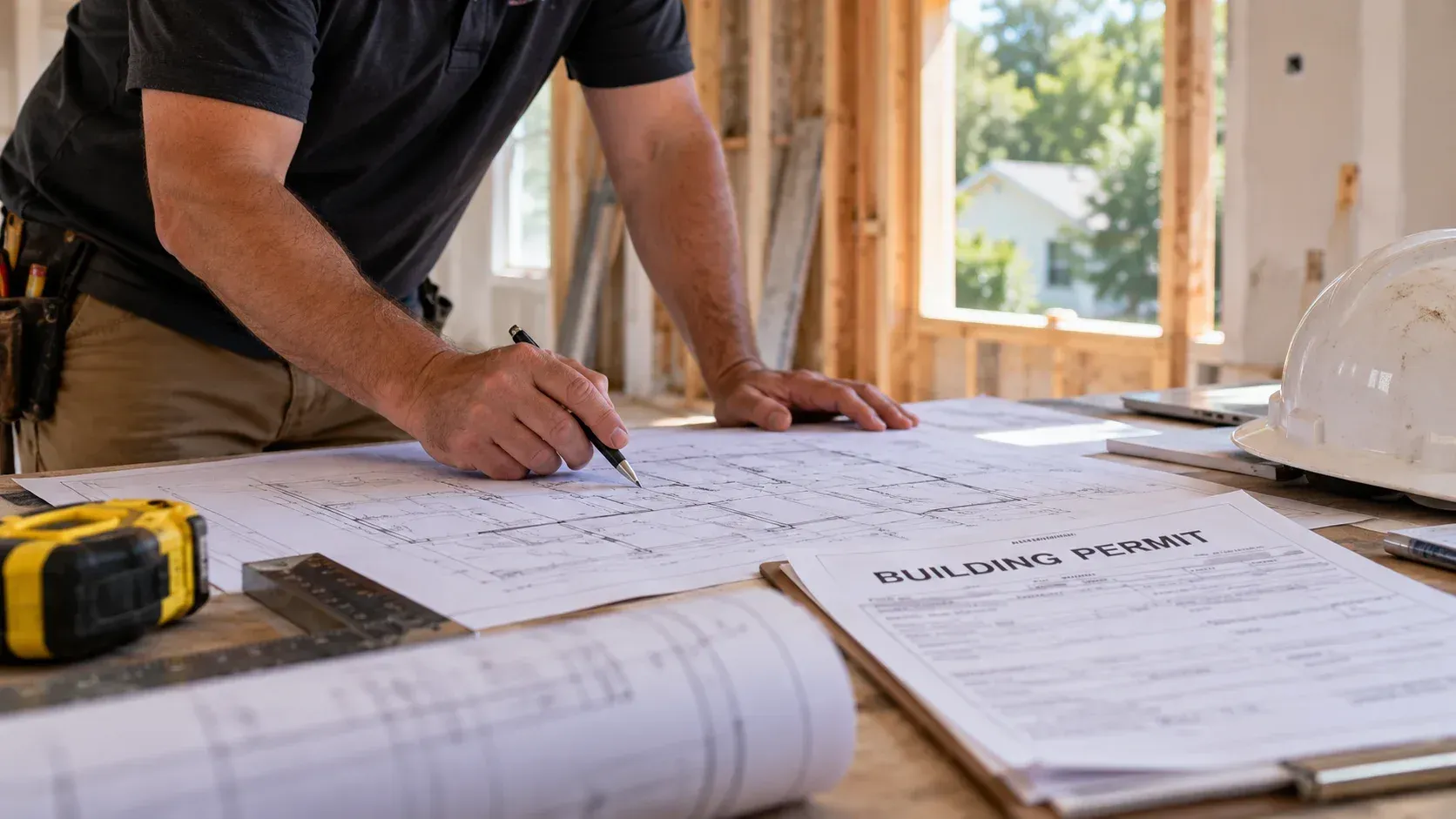
Outdoor kitchens frequently need permits, particularly once gas, plumbing or electrical are involved, and the rules depend on your jurisdiction.
Lake properties add more. Shoreline setbacks, lake authority requirements and HOA rules can all apply, and a slope or retaining structure may bring its own review. We are not going to publish distances here that may not match your parcel.
Check with your county or city building department early, confirm anything shoreline related before design is finalized, and check your HOA covenants. What needs a permit around here covers the general picture for Mid-Missouri. On our projects, our team manages the necessary permits and ensures the construction complies with local codes.
Doing this first is cheaper than redesigning around a setback you found out about late.
Conclusion
Pick the site, price the utility runs, and get the foundation right. Those three decide both the budget and whether the thing is still solid in ten years. The grill is almost a detail by comparison.
At the Lake, add the slope and the shoreline rules to that list, and check them before the design is locked. Then buy materials that handle a Missouri winter, because the climate here is relentless on anything built outdoors.
Start With a Plan, Not a Product List
The useful first conversation is about your site and your utilities, not a catalogue.
Each project starts with a detailed consultation covering layout, materials, appliances and finishes, and we design from scratch around your preferences rather than a template. We also offer pre-built setups for homeowners who want to minimize construction time, and upgrades to kitchens you already have. M&M Construction Solutions is locally owned, licensed and insured, with 14+ years of combined experience. We build throughout Mid-Missouri, including the Lake Ozarks area.
Estimates within 30 miles of California, MO are free. Beyond that, a quote is $25, credited toward the job if you accept the bid.
Tell us where the kitchen would sit and how far it is from the house and we can be useful quickly. Call
(573) 415-6731.
Frequently Asked Questions
What drives the cost of an outdoor kitchen most?
Utility runs and the foundation, not the appliances. Trenching gas, water and power out to the site, plus a base that will not move with the frost, usually account for more than everything you cook on.
Can I build one on my existing deck?
Sometimes. Masonry kitchens are heavy and most decks were not framed for that load. The structure has to be assessed first. Options are reinforcing the framing, choosing a lighter modular unit, or rebuilding underneath.
Do I need a permit for an outdoor kitchen?
Often, especially once gas, plumbing or electrical are involved, and requirements vary by jurisdiction. Lake properties may also have shoreline setbacks and HOA rules. Check with your county or city building department before finalizing the design.
Is a built-in kitchen worth it over a modular one?
If you are staying put, usually yes. Built-in masonry lasts longer and adds more to the property. Modular costs less, goes in faster, and can move with you, which suits anyone unsure about the next few years.
What should I do before winter?
Drain any water lines serving the kitchen before the first hard freeze, and cover or store what the manufacturer says to. Freeze-thaw damage is the main thing that shortens the life of an outdoor kitchen here.
Related Posts