Why a Custom Deck Is More Than Just an Outdoor Addition - It’s a Lifestyle Upgrade
Table of Contents
- Introduction
- Material Tradeoffs: Composite, Pressure-Treated, and Cedar
- Layout Decisions That Matter More Than Style
- What Missouri Weather Means for Footings and Framing
- Which Add-Ons Actually Hold Value
- Planning a Custom Deck?
- Frequently Asked Questions
Key Takeaways
- Material choice is a tradeoff between upfront cost, maintenance, and lifespan, not a single "best" option for every project.
- Deck footings need to be set below the local frost line, which affects both cost and timeline more than most homeowners expect going in.
- Railing height and baluster spacing are set by building code, not just personal preference.
- Layout decisions like traffic flow from the house and sun exposure through the day affect daily use more than material or finish choices.
- Built-in features that get used often, like seating and shade structures, tend to hold their value better than purely decorative extras.
Introduction
The right custom deck design depends more on how a household will actually use the space (daily meals outside, entertaining, a quiet spot with morning coffee) than on which material looks best in a photo, and layout decisions made early are harder and more expensive to change once construction starts. For homeowners around Mid-Missouri, material and footing choices also have to account for freeze-thaw winters and humid summers, which affect both how a deck is built and how it holds up over time.
Before getting into design details, it helps to understand the tradeoffs behind material choice, what the layout decisions actually affect, and what local weather means for how the structure gets built. A custom deck project tends to go smoother when those decisions are made in that order, rather than starting with finishes.
Material Tradeoffs: Composite, Pressure-Treated, and Cedar
Composite decking: higher upfront cost, but low maintenance since it doesn't need staining or sealing, and it holds up well through Missouri's humidity swings without warping.
Pressure-treated wood: the lowest upfront cost, but it needs periodic staining or sealing to prevent warping, splintering, and rot, and skipping that upkeep shortens its practical lifespan noticeably.
Cedar or redwood: a natural look with better rot resistance than pressure-treated wood, but it still needs regular sealing to hold its color and resist moisture, at a higher material cost than pressure-treated lumber.
There isn't a universally "best" choice here. It's a tradeoff between what's spent upfront and what's spent on maintenance over the years the deck is in use.
Layout Decisions That Matter More Than Style
A few layout questions affect daily use more than the finish selections do:
- Traffic flow: where the deck connects to the house, and whether that's actually the door people use most
- Sun and shade: which direction the deck faces and how that affects usability in the afternoon, especially through a Missouri summer
- Sightlines and privacy: how visible the deck is from neighboring yards or the street, which affects how comfortable it feels to actually use
- Sizing for real use: building around actual furniture and how the space will be used, rather than maximizing square footage for its own sake
Getting these right before finalizing materials tends to matter more to long-term satisfaction than the finish choices do.
What Missouri Weather Means for Footings and Framing
Freeze-thaw cycles through the winter mean deck footings have to be set below the local frost line, or the structure can heave and shift over time as the ground freezes and thaws. The exact depth required is set by local building code and varies by area, so it's worth confirming with a contractor or the local building department rather than assuming a standard depth applies everywhere.
Humidity swings between seasons also affect how lumber is spaced during installation, since wood expands and contracts with moisture. A deck built without accounting for that movement is more likely to develop gaps, warping, or squeaking over time.
Which Add-Ons Actually Hold Value
- Built-in seating and shade structures (like a pergola) tend to get consistent use and hold up well over time
- Fire features add real appeal but come with their own clearance and code requirements that should be confirmed early in planning
- Purely decorative extras that don't match how the household actually uses outdoor space are the ones most likely to go unused
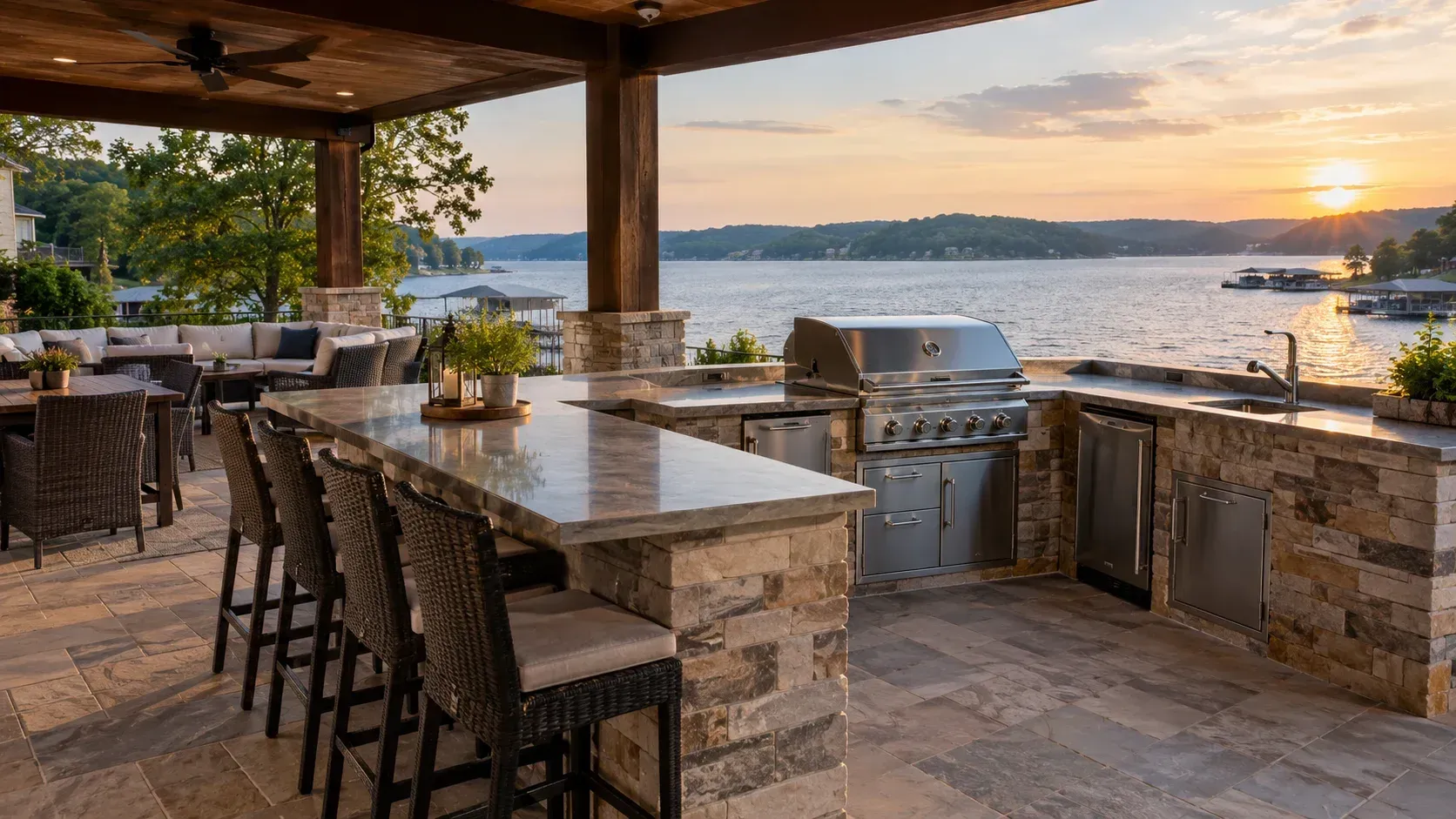
For a project that extends beyond the deck itself, into features like outdoor kitchens or fire pits, a broader outdoor living space may be worth considering as part of the same planning process.
Planning a Custom Deck?
Once you've thought through materials, layout, and how the space will actually be used, our team can help confirm what's feasible for your yard and your budget.
Contact us to get started.
Frequently Asked Questions
What's the most durable material for a custom deck?
Composite decking generally holds up the longest with the least maintenance, though pressure-treated wood and cedar can also last many years with regular sealing and upkeep.
How deep do deck footings need to be in Missouri?
Footings need to be set below the local frost line to prevent heaving from freeze-thaw cycles, and the exact required depth is set by local building code, so it's worth confirming with your contractor or building department.
Is composite decking worth the extra cost over wood?
It depends on how much ongoing maintenance you want to take on. Composite costs more upfront but eliminates the staining and sealing that pressure-treated or cedar decking need over time.
What deck features add the most value?
Built-in seating and shade structures tend to get used consistently and hold their value, more so than purely decorative add-ons that don't match how the space is actually used.
Do I need a permit to build a custom deck?
In most cases, yes, particularly for anything attached to the house or built above a certain height. The permitting requirements for remodeling and outdoor projects in Mid-Missouri are covered in more detail in this guide to permits for home additions and remodels.
Related Posts